Ross MercerPractical LeadershipGet the books
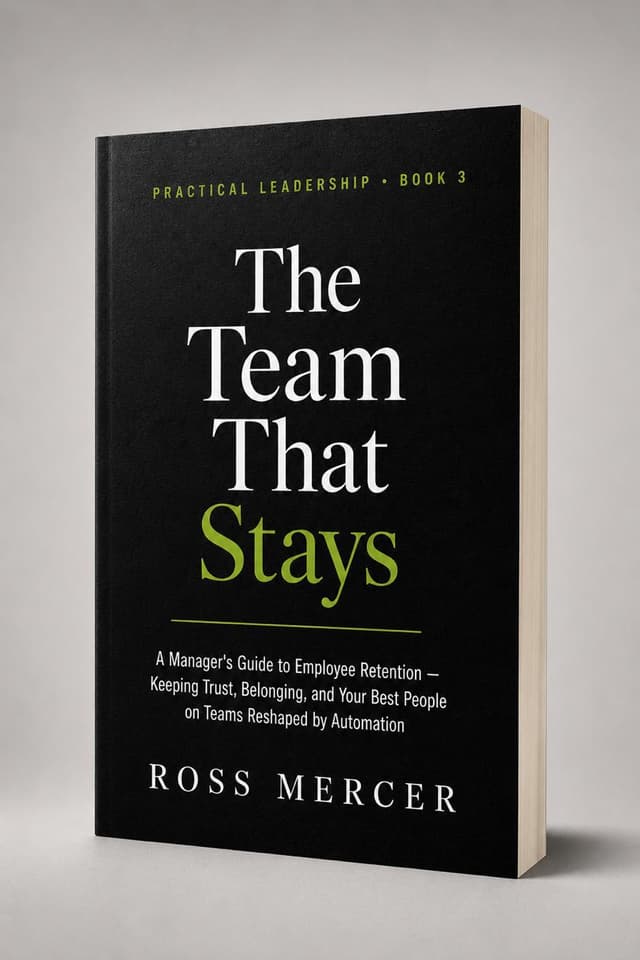
The Team That Stays — book cover
Practical Leadership · Book 3

The Team That Stays

Keeping trust, belonging, and your best people on teams reshaped by automation.

E-book
$14.99
Complete Package
$79

Instant download · secure checkout by Stripe

Prefer paperback?

Get the paperback on Amazon · $19.99 ↗

Affiliate link — as an Amazon Associate we earn from qualifying purchases.

Inside the book

  • Spot the quiet signals before someone quits
  • Build belonging on a team that keeps changing
  • Run the stay conversation that actually works
The Retention Toolkit

Stay-conversation scripts and early-warning checklists.

Not a summary of the book — the kit is the doing layer: fillable PDFs you type straight into, one-page cards to bring into the room, and step-by-step worksheets. What you read in the book, the kit lets you run.

  • Stay-conversation scripts and openers
  • Flight-risk and stay-signals checklists
  • A team-reset plan for after the churn

Bought the paperback on Amazon? Get the Retention Toolkit on its own.

Instant download · works alongside the paperback.

All four books

Get the Complete Library

All 4 e-books + all 4 Premium Kits for $199 $316 — save $117.

Build your set →
A real page · free

Here are the actual words.

Two moments from the stay-interview script in Chapter 3 — the opening, and the question at the center of it.

Chapter 3 · The Script

The Stay Interview

Opening (set the stakes low)

“Thanks for making time. This isn’t a review and there’s nothing wrong. I do these with the people I’d really hate to lose, a couple times a year. I’d rather hear what’s working and what isn’t while you’re here and I can actually do something about it, instead of finding out later. So this is mostly me asking and listening. Sound okay?”

The direct one

“Let me ask the real one. What would make you start thinking about leaving? Doesn’t have to be likely. I just want to know what’s on the list.”

[This is the center of the interview. Let the silence work. Whatever they say, your first response is “okay, tell me more,” not a rebuttal.]

The full script runs opening through close — with variations for the guarded person, the burned-out person, and the remote one-on-one, plus the lines to avoid.